

Behavioral Decision Intelligence
Behavioral Decision Intelligence: Bringing the Human Layer into Strategy
Business intentions depend on people’s choices, but we often leave the gap between intention and action to a campaign, a workshop, or another reminder. Behavior deserves a place at the heart of strategy.
- Author
- By Milena Nikolova
- Published
- October 7, 2026
This article in three bullet points
- The bikes are ready. The guest is interested. Yet they take the car. Business intentions depend on people’s choices, but we often leave the gap between intention and action to a campaign, a workshop, or another reminder. Behavior deserves a place at the heart of strategy.
- What if we could connect the dots across an entire hotel, airport, or destination? At BehaviorSMART, we are developing Behavioral Decision Intelligence (BDI) to do that. Combining behavioral expertise, industry knowledge, and AI, we identify patterns across people’s journeys and help make desired choices easier and more appealing.
- Build the support into the everyday experience. When designs become part of routines, spaces, and services, they create behavioral infrastructure that supports choices time after time. Success becomes less dependent on everyone arriving already motivated, informed, and willing to make an extra effort.
Imagine a hotel that invests in bikes and a rental service so guests can explore the area. One guest likes the idea, but questions arise: Which route would suit them? How long would it take? Is there somewhere worth stopping for lunch? Taking the car feels more straightforward.
The hotel has invested, and the guest is interested. Yet the bikes remain unused. Somewhere between the business intention and the guest’s decision, the conditions needed to support that choice are missing.
This relationship between investment and behavior runs throughout tourism and hospitality. A business can introduce a new solution to improve efficiency, but realizing the expected return depends on employees adopting it and using it as intended. Manuals explain the process. Whether it becomes everyday practice also depends on routines, priorities and working conditions.
Behavior connects investment to revenue, operating costs, guest experience and resource use. Yet it often receives fragmented attention: a short communications campaign, a staff workshop or a reminder asking people to act differently.
I believe behavior deserves a more systematic place in strategy. Organizations run through people’s decisions and actions. In our industry, whatever technology makes possible, the human experience remains central to what we offer.
That conviction underpins the methodology we have been developing at BehaviorSMART: Behavioral Decision Intelligence, or BDI.
Making the behavioral layer visible
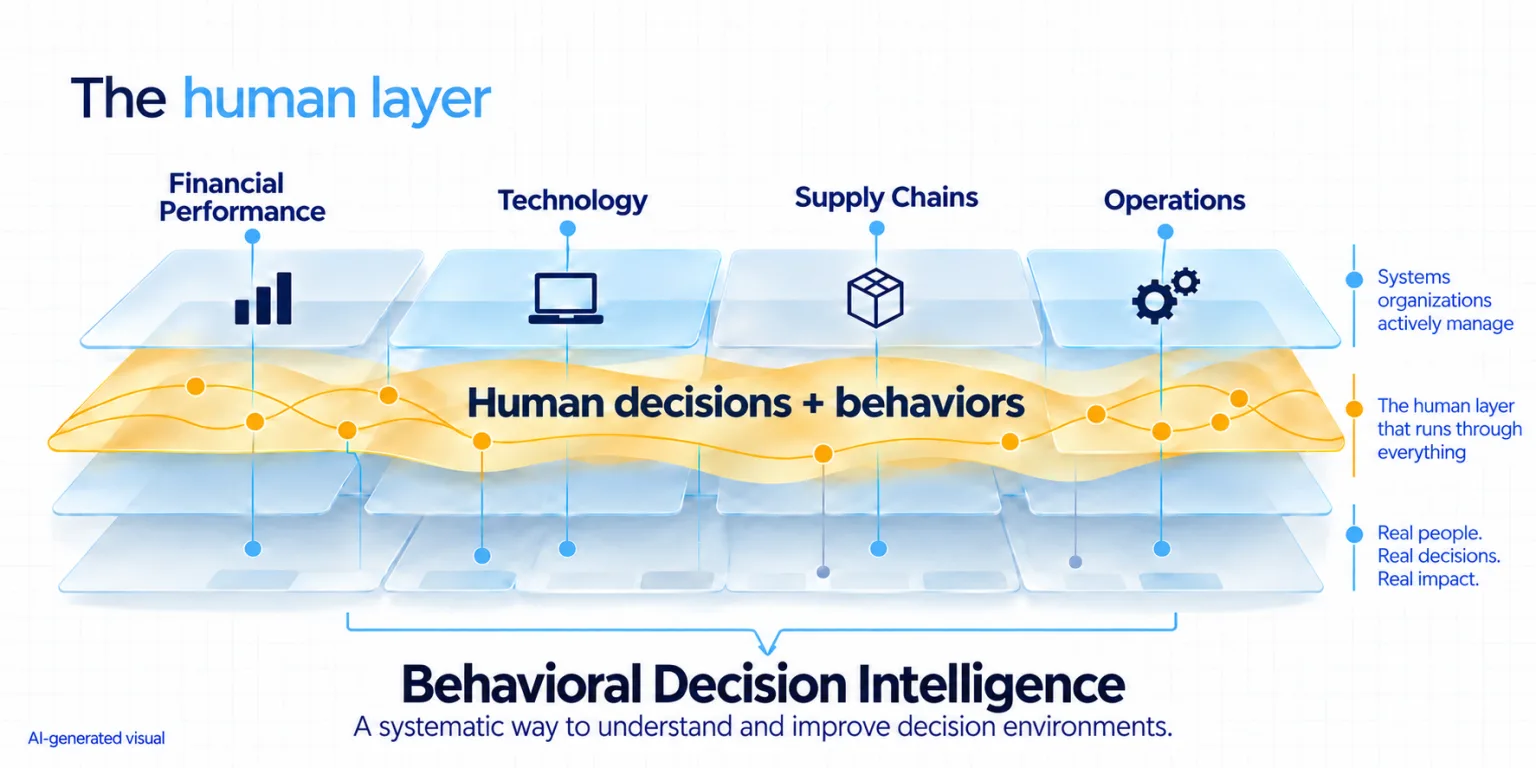
BDI combines behavioral expertise, an understanding of tourism, hospitality and leisure, and AI-assisted analysis to make behavioral patterns across an organization or ecosystem visible and help shape them intentionally.
It asks where choices happen, what shapes them, how they connect, and which designs could support desired behaviors in that setting.
Consider our illustrative hotel. The guest’s decision involves more than the availability of bikes. It may be shaped by information received before arrival, recommendations at reception, the booking process, and appealing places to visit. Employees need the knowledge, time, and routines to support those choices.
BDI brings these moments into a shared view, helping identify patterns and opportunities to shift them. That includes guests, employees, suppliers and partners: people making choices and those shaping the choices available to others.
From individual choices to patterns at scale
Most of our work in the past addressed individual episodes and choice points within journeys, drawing on an understanding of people, context and the conditions shaping decisions. BDI extends this foundation across more connected decisions and settings.
Imagine supporting exploration by bike across a destination, through hotels, rental providers, attractions and visitor information services. Each contributes to the conditions travelers encounter. Together, their actions could help shift a wider pattern of mobility.
AI expands the scale and complexity we can work with. It helps us process more information, identify potential patterns, and examine many choice moments together. Diverse inputs, from floor plans to service arrangements and visitor profiles, can inform the analysis. Our behavioral expertise guides their interpretation and translation into designs to test.
A solution may remove a barrier, increase an option’s appeal, or do both.
For our hotel guest, simple booking and clear route information could remove barriers. A suggested itinerary connecting scenic spots, a local bakery, and places they might otherwise miss could make cycling a highlight of their stay.
One guest may already want to cycle but need reassurance. Another may find renting straightforward but need a compelling reason to choose it. Our expertise lies in identifying which approach fits the specific environment and how to implement it.
Scale must therefore come with sensitivity to context.
A design suited to a small executive event may need substantial adaptation for a 900-person event with diverse attendees. BDI helps us adapt behavioral design templates across contexts, retaining relevant principles while changing their application.
Working with destinations and individual businesses
Two examples from our ongoing work illustrate these scales: a regional initiative in Arctic Sweden and an event-focused collaboration with EHL Hospitality Business School in Lausanne, which hosts hundreds of events on its campus every year.
Our Arctic work began with a visitor code of conduct describing desired behaviors for the entire Arctic Europe region, including Arctic Sweden, Arctic Norway and Finnish Lapland. We have already designed the pathways from these ideal norms to actual visitor behaviors aligned with them. Now, in Arctic Sweden, we are starting to work with local businesses to embed choice designs into services and operations, with “buy local, choose local” as the pilot topic.
Our BDI methodology helps identify relevant episodes and choice moments across the destination and multiple visitor journeys. These might include choosing where to eat, booking an experience, or asking hotel staff what to explore nearby.
Each business contributes to a wider effort. Together, these embedded designs are intended to create a cumulative shift in the pattern of local purchasing across the destination.
With EHL Hospitality Business School, we are exploring business-level application through a living lab project focused on events. Together, we are experimenting with designs that encourage public transport use, reduce food waste, and support healthier food choices.

An attendee choosing lunch may be unsure whether a smaller portion will be enough or whether they can return for more. Such details matter when designing ways to reduce waste. We examine relevant moments throughout the attendee journey and explore designs suited to different event formats, profiles and settings.
Both projects are ongoing, with testing and learning informing how the designs develop and what effects they achieve.
Building behavioral infrastructure
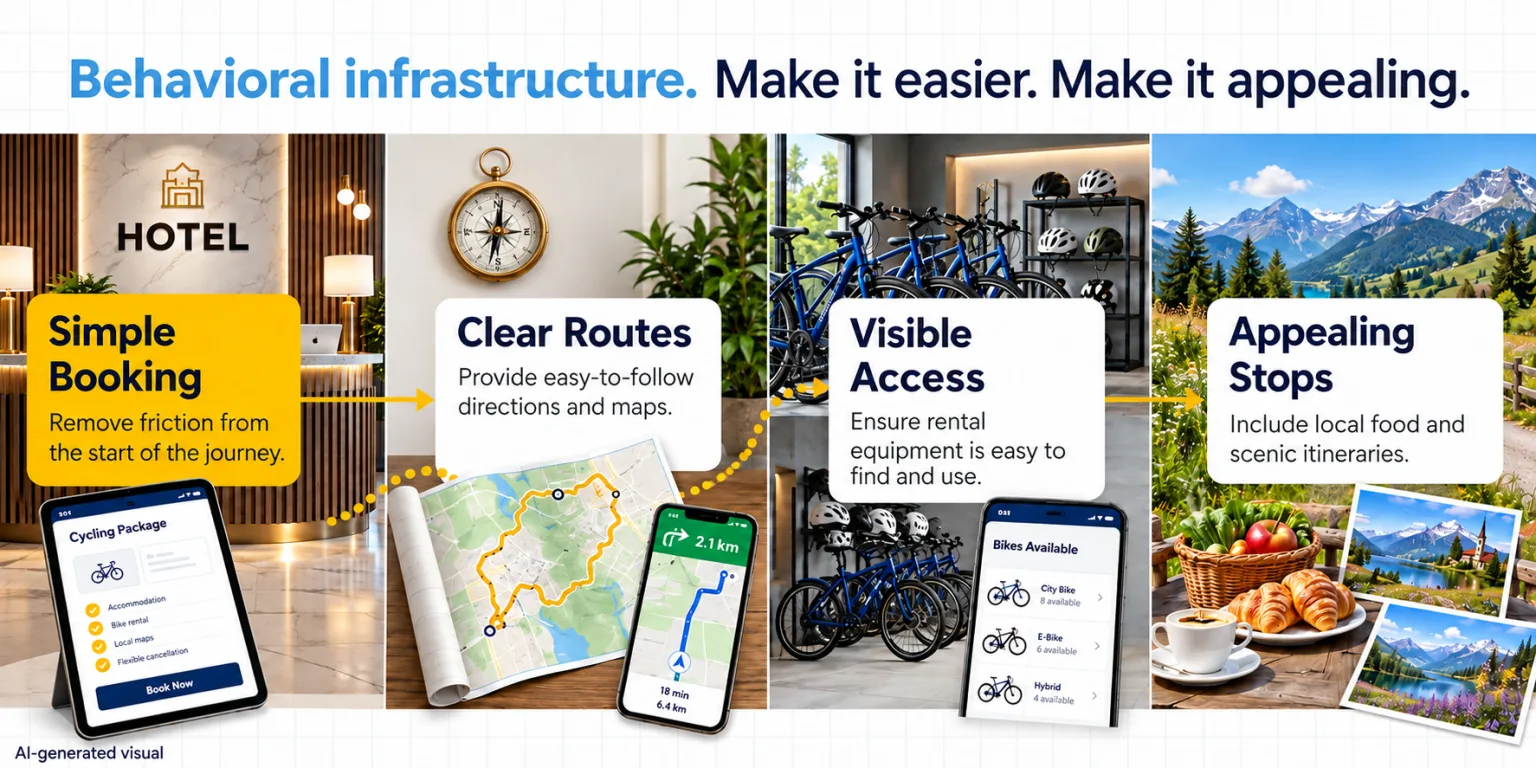
The longer-term opportunity is to embed effective choice designs into everyday operations, deliberately supporting desired behavioral patterns across an organization or destination.
When these designs become part of booking processes, service routines, physical environments and partner arrangements, they create what I think of as behavioral infrastructure: conditions that repeatedly support particular choices and help establish an intended pattern over time.
For our illustrative hotel, that means cycling becomes part of how the stay is designed and delivered, supported by staff recommendations, practical arrangements and appealing experiences.
This reduces dependence on every individual arriving already motivated, informed and willing to make an extra effort.
People retain their choices, while the environment consistently supports desired behaviors. Because that support is embedded in operations, it can continue beyond a campaign or an individual visit. Its effects need to be measured and refined as circumstances evolve.
An organization gains a systematic understanding of behavioral patterns and a way to influence them intentionally. Our specialist expertise translates that understanding into designs and supports their implementation and adaptation.
For leaders in tourism and hospitality, the starting question is straightforward: which behaviors does your strategy depend on, and how deliberately have you designed the conditions that support them?
One outcome, and the decisions behind it
Pick one result your organization wants to move. Tell us what you see today and where the decisions behind it are made, and we can talk through how we would approach it.